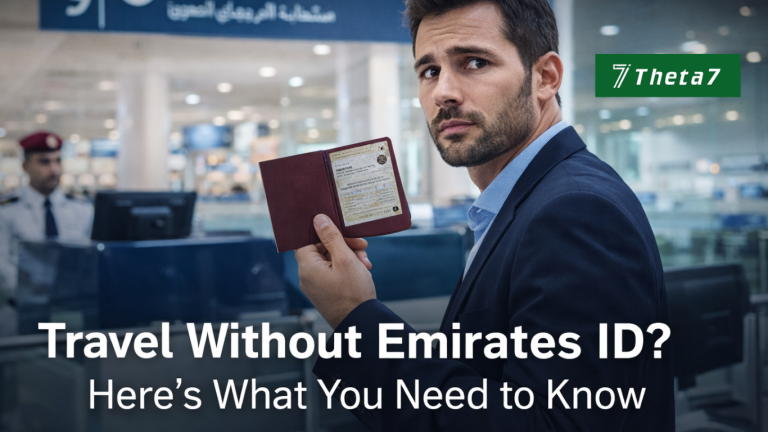
My Emirates ID is Still Not Issued: Can I Leave and Return to the UAE on My Residence Visa Without It?
Quick Answer:
- ✅ Yes, you can leave the UAE without your Emirates ID
- ✅ You can return if your residence visa is stamped and valid
- ⚠️ You may face delays at immigration (manual counters required)
- ❌ Do NOT travel if your visa is not yet stamped
The dream of working, living, and thriving in the United Arab Emirates often begins with the promise of a vibrant lifestyle and abundant opportunities. For many expatriates, securing residency is a crucial step, culminating in the issuance of the coveted Emirates ID. This small, plastic card is more than just an identification document; it's your gateway to essential services, from opening bank accounts and accessing healt
But what happens when the issuance process hits a snag? You've completed your medical tests, submitted your documents, and your residence visa is stamped in your passport, yet the Emirates ID remains elusive. The anxiety can be palpable, especially when travel plans loom. Can you actually leave the UAE and return on your residence visa if your Emirates ID is still pending? This is a question that sends ripples of concern through many expatriate communities, sparking debates and often leading to conflicting advice.
According to official statistics, the UAE is home to millions of expatriates, a significant portion of whom rely on their residence visas and Emirates IDs for their daily lives and international mobility. The General Directorate of Residency and Foreigners Affairs (GDRFA) in Dubai, for instance, processes a vast number of residency applications annually.
The delays in Emirates ID issuance, while not the norm, can sometimes occur due to various reasons, from administrative backlogs to individual application complexities. Understanding the nuances of exiting and re-entering the UAE without the physical Emirates ID card is paramount to avoiding potential travel disruptions. This article aims to demystify this process, providing clear, actionable information based on official guidelines and common practices.
Understanding the Emirates ID and its Role
Before diving into the complexities of travel, it's essential to grasp the significance of the Emirates ID. Issued by the Federal Authority for Identity, Citizenship, Customs and Port Security (ICP), formerly known as the Emirates Identity Authority (EIDA), the Emirates ID is a mandatory identification document for all UAE residents, including citizens. It serves as proof of identity and residency.
The card contains a chip that stores personal information, including biometric data, and is linked to various government services. Its functionalities are extensive:
- Access to Government Services: It's the primary key to accessing services from entities like the Ministry of Human Resources and Emiratisation (MOHRE), the Dubai Health Authority (DHA), and the Roads and Transport Authority (RTA).
- Banking and Financial Transactions: Banks require your Emirates ID to open accounts, process transactions, and verify your identity.
- Healthcare: For accessing medical facilities and insurance services, your Emirates ID is often indispensable.
- Employment: Employers use it for various administrative processes related to your employment contract and social security.
- Travel: This is where the confusion often arises. While your residence visa stamped in your passport is the primary document authorizing your stay, the Emirates ID plays a crucial role in facilitating re-entry, especially through automated gates and for border control purposes.
The Emirates ID application process typically involves several steps: filling out an application form, submitting required documents, undergoing a medical examination, and providing biometric data (fingerprints and photograph). Once approved, the card is printed and delivered. However, the time taken for this can vary.
The Crucial Distinction: Residence Visa vs. Emirates ID
It is vital to distinguish between your residence visa and your Emirates ID.
Your residence visa is the legal authorization granted by the UAE government that permits you to live and work in the country for a specified period. It is typically stamped directly into your passport. This stamp is the primary legal document that allows you to enter and reside in the UAE.
Your Emirates ID, on the other hand, is a secondary identification and service access card. While it is mandatory and incredibly useful for daily life, it is not, in itself, the document that grants you the right to reside in the UAE.
This distinction is key to understanding the travel scenario. If your residence visa is valid and stamped in your passport, you legally have the right to be in the UAE. The challenge arises in the practicality of re-entry without the physical Emirates ID.
Can You Leave the UAE Without Your Emirates ID?
The short answer is: Yes, you generally can leave the UAE without your physical Emirates ID card, provided your residence visa is valid and stamped in your passport.
When you exit the UAE, immigration officers will primarily check your passport for a valid entry stamp and, if applicable, your residence visa. If your visa is valid, you will be permitted to depart. The Emirates ID is not typically scanned or checked at the exit gates.
However, the real concern for most expatriates is re-entering the UAE.
Re-entering the UAE Without Your Emirates ID: The Nuances
This is where the situation becomes more complex and depends on several factors.
1. Your Residence Visa Status
- Valid and Stamped Residence Visa: If your residence visa is valid and correctly stamped in your passport, this is your primary document for re-entry. Border control officers at the UAE ports of entry (airports, land borders, seaports) will verify this visa.
- Visa Processing Only (No Stamp Yet): If you have applied for a residence visa and are awaiting the final stamp, or if your visa has been approved but not yet stamped in your passport, leaving the country is highly risky. You might not be allowed to re-enter without the stamped visa. It is strongly advised not to leave the UAE if your residence visa is still in the processing stage and not physically stamped in your passport.
2. How Long Will You Be Outside the UAE?
- Short Trips: For short trips (e.g., a few days or weeks), re-entry is usually smoother, as long as your visa is valid.
- Extended Absences: If you plan to be outside the UAE for an extended period (typically more than six months), your residence visa might be automatically cancelled, unless you have obtained a specific re-entry permit. This is a separate process from the Emirates ID issuance.
3. The Role of the Emirates ID in Re-entry
While your visa is paramount, the Emirates ID often streamlines the re-entry process.
- Automated Gates: Many UAE airports have automated gates that use biometric data linked to your Emirates ID for faster processing. Without your Emirates ID, you will have to use the manual immigration counters.
- Border Control Checks: At the manual counters, immigration officers will examine your passport and verify your visa status through their system. They may also check for your Emirates ID details in the system. If your Emirates ID is still pending issuance, they will see this. In most cases, as long as your visa is valid, they should allow you to enter.
- Potential for Delays: Using manual counters can sometimes lead to longer queues and potential delays, especially during peak travel times.
4. Specific Airport and Immigration Procedures
Immigration procedures can vary slightly between different emirates and even between different airports within the same emirate. While the core regulations are federal, the implementation might have minor differences.
What to Do If Your Emirates ID is Pending and You Need to Travel
If you find yourself in this situation, here's a step-by-step guide:
Step 1: Verify Your Residence Visa Status
- Check Your Passport: Ensure your residence visa is officially stamped in your passport.
- Confirm Validity: Make sure the visa has not expired and that you are within the allowed period of stay.
- Contact Your Sponsor/Employer: If you are unsure about your visa status, contact your sponsor (if you are on a family visa) or your employer (if you are on an employment visa). They can help clarify your residency status.
Step 2: Gather Supporting Documents
When you travel, carry all relevant documents that can prove your legal residency and the status of your Emirates ID application. This includes:
- Your Passport: With the valid residence visa stamp.
- Visa Application Reference Number: If you have one, keep it handy.
- Emirates ID Application Confirmation: A printout or digital copy of your Emirates ID application receipt or acknowledgement. This shows you have initiated the process.
- Medical Test Results: Keep copies of your medical fitness test results.
- Employment Contract: If applicable, carry a copy of your employment contract.
- Letter from Sponsor/Employer: A letter from your employer or sponsor confirming your sponsorship and residency status can be very helpful. This letter should ideally state that your Emirates ID is pending.
- Proof of Address: Documents like a tenancy contract can also be useful.
Step 3: Communicate with Immigration Officials
When you arrive at the immigration counter for re-entry, be prepared to explain your situation calmly and clearly.
- Be Honest: Inform the immigration officer that your Emirates ID is still being processed.
- Present Your Documents: Hand over your passport and any supporting documents you have gathered.
- Cooperate: Answer any questions the officer may have politely and accurately.
Step 4: Consider Obtaining a Temporary Emirates ID or Entry Permit (If Applicable)
In some specific circumstances, and depending on the policies in place at the time of your travel, there might be options to obtain temporary documentation. However, this is not a standard procedure for all pending Emirates ID cases.
- ICP Customer Happiness Centres: You can visit an ICP Customer Happiness Centre to inquire about your application status and potential options. They might be able to provide an official letter confirming your application status, which could be useful.
- Re-entry Permit: If you anticipate a long absence and your visa might expire, you need to apply for a re-entry permit before leaving the UAE. This is a separate process from the Emirates ID. You can apply for this through the ICP or GDRFA portals. This permit allows you to stay outside the UAE for more than six months without your residence visa being cancelled.
Reasons for Emirates ID Delays
Understanding why your Emirates ID might be delayed can help you manage expectations and potentially expedite the process if possible. Common reasons include:
- Administrative Backlogs: High volumes of applications can sometimes lead to processing delays at the ICP.
- Incomplete or Incorrect Documentation: Errors in the application form or missing documents can halt the process until rectified.
- Biometric Data Issues: Problems with fingerprint scanning or photograph quality can require resubmission.
- Medical Test Results: Any discrepancies or issues flagged during the medical examination might require further investigation, delaying the ID issuance.
- Security Clearances: For certain nationalities or professions, additional security checks might be necessary.
- System Glitches: Occasionally, technical issues with the ICP's systems can cause delays.
The ICP has made significant strides in digitizing services and streamlining processes. You can often track your Emirates ID application status online through the ICP website or their smart app.
Official Sources and Recommendations
For the most accurate and up-to-date information, always refer to official government sources.
- Federal Authority for Identity, Citizenship, Customs and Port Security (ICP): The ICP is the primary authority responsible for Emirates ID. Their official website (https://icp.gov.ae/en/) provides comprehensive information on application procedures, required documents, and tracking services.
- General Directorate of Residency and Foreigners Affairs (GDRFA): Each emirate has its GDRFA (e.g., GDRFA Dubai, GDRFA Abu Dhabi) which handles residency visas. Their websites also offer valuable information. For instance, the Dubai GDRFA website is a key resource for residents in Dubai.
✈️ Still Not Sure? Don’t Take the Risk
Traveling without your Emirates ID can be smooth—but only if everything is in order. One small mistake could delay your return or cause unnecessary stress.
👉 Speak to a UAE Residency Expert Now
Get fast, accurate answers tailored to your situation so you can travel with confidence.
Avoid guesswork. Travel smart.
Conclusion
Yes, you can leave and return to the UAE without your Emirates ID—but only if your residence visa is valid and stamped. While the process may involve manual checks and slight delays, most residents re-enter without issues when properly prepared.
The key is simple: verify, prepare, and travel smart.